

ANNOUNCEMENTS

The primary challenge of the modern human race is to improve well-being across generations, an objective now widely recognized as Sustainable Development. This challenge necessitates numerous interventions concerning each of its components: environmental, social and economic. These interventions range from eradication of hunger and poverty to reduction in inequality; from the provision of quality education, good health, decent work environment, water, sanitation, affordable and clean energy to fostering gender equality; from economic growth to effective institutions; from responsible consumption and production to taking urgent actions to combat climate change.
The Department of Policy and Management Studies (DoPMS) at TERI School of Advanced Studies (TERI SAS) aims to contribute to theoretical and empirical enquiry towards informed prescriptions, implementable policies, sustainable practices and management through research, teaching and training. The continued research in sustainability for the business is also one of the key concerns of the Department.
Faculty of the Department have disciplinary backgrounds in Anthropology, Economics, Population Studies, Sociology, Finance & Accounting, Corporate and Commercial Laws, Public Health, Strategy, Business Sustainability, Circular Economy Finance, Climate Finance, Development Studies and Public Policy. This diversity enables the promotion of multi-disciplinary research and learning at the economy-society-ecology interface. The faculties are engaged in active research in their disciplines as well as within the broad theme of sustainable development. This is reflected in their publications, sponsored projects, consultancies and training programmes and supervised research. The faculty regularly engage with the scientific community through seminars and conferences, participate in different forums as experts or resource persons, and engage with the general public through their lectures, print and digital media.
Vision
To contribute to a better understanding of sustainable ecosystems, societies, economies and businesses locally and globally.
Mission
• To build a cadre of sustainable development practitioners, thought leaders, change agents, entrepreneurs, effective managers and executives who can generate new knowledge, influence policies and practices embracing the idea and intent for a sustainable local, regional, and global future.
• To develop a hub for an integrated/holistic research to help frame, design, implement and guide sustainable development policies and sustainable businesses.
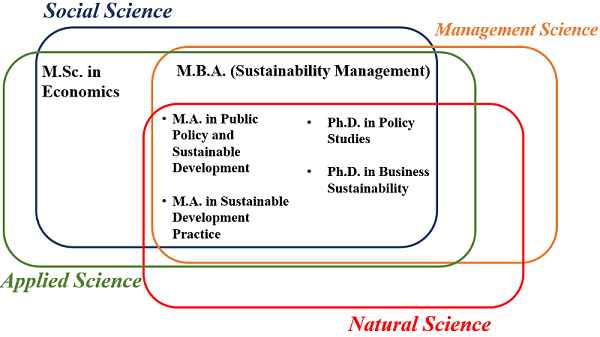
 |
Dr Gopal Sarangi |
 Notification for constitution of BoS of DPMS - 2023-2024Notification for constitution of BoS of DPMS - 2023-2024Notification for constitution of BoS of DPMS - 2022-2023Notification for constitution of BoS of DPMS - 2021-2022 - Notification no. 1Notification for constitution of BoS of DPMS - 2021-2022 - Notification no. 2 Minutes of meeting - 5th May 2023 Minutes of meeting - 13th Jan 2023 Minutes of meeting - 10th Jan 2023 Minutes of meeting - 18th Aug 2022 Minutes of meeting - 17th Aug 2022 Notification of composition of DAIP of DPMS - 2022-2023 Notification of composition of DAIP of DPMS - 2021-2022
The Department embraces the philosophy that policy recommendations for sustainable development must be grounded in rigorous research that engages with alternative schools of thought across disciplines. Such research must be theoretically grounded, socially relevant and empirically rich, besides being linked to historical experiences. The Department, therefore, strives to promote a culture that enables command across disciplines, develops critical thinking and nurtures analytical mind.
The research culture also recognizes that theoretical constructs can also be built through analysing observations from the field and not necessarily the other way round. Faculty members actively encourage students to participate in field surveys, to extract truth from ‘facts’, and to create an organic link between theoretical understanding and field-based experiences. The Department also promotes debate and discussion through workshops, seminars, research colloquiums among others that attract active participation from students and faculty members.
The thematic areas of research at the Department of Policy Studies include but not limited to are as follows:
• Agrarian Relations
• Auction Theory
• Biophysical accounting
• Biotechnology and Society Interface
• Business and Infrastructure Law
• Climate Change, Exclusion and Vulnerability
• Ecology and Politics
• Energy Economics
• Environment and Natural Resources Law
• Globalization and Environment
• Intellectual Property Rights
• Education and Development
• International Economics
• Labour Economics
• Environment and Health
• Mechanism Design
• Natural Resource Economics
• Population, Health and Nutrition Issues
• Social and Individual Choice
• Urban Economics
• Valuation of Ecosystem Services

 All Change: Equitably Decarbonising India's Transportation Sector’ funded by British Academy and collaboratively executed by De Montfort University, UK and TERI SAS, India